
This past week, I took a little bit of detour after finally putting lazyweb out in the wild to build a small screenshot tool called lazyscreenshots which I put it out on product hunt today. It is a little weekend project break to solve a small annoyance of sending screenshots back and forth with Codex and Claude.
Anyways, now that v0 of Lazyweb is out…its time to get attention, especially in a world where I can one shot a new mac screenshot tool in a few hours, distribution is everything!
So I will hand off the reins today to Marlon Grandy, who took the simplest idea you can build, an alarm clock and turned it into a viral phenomena on Tiktok (see examples here, here and here)
Guest post by Marlon Grandy
How an Alarm App Got 25 Million Views and 100K Downloads in 30 Days
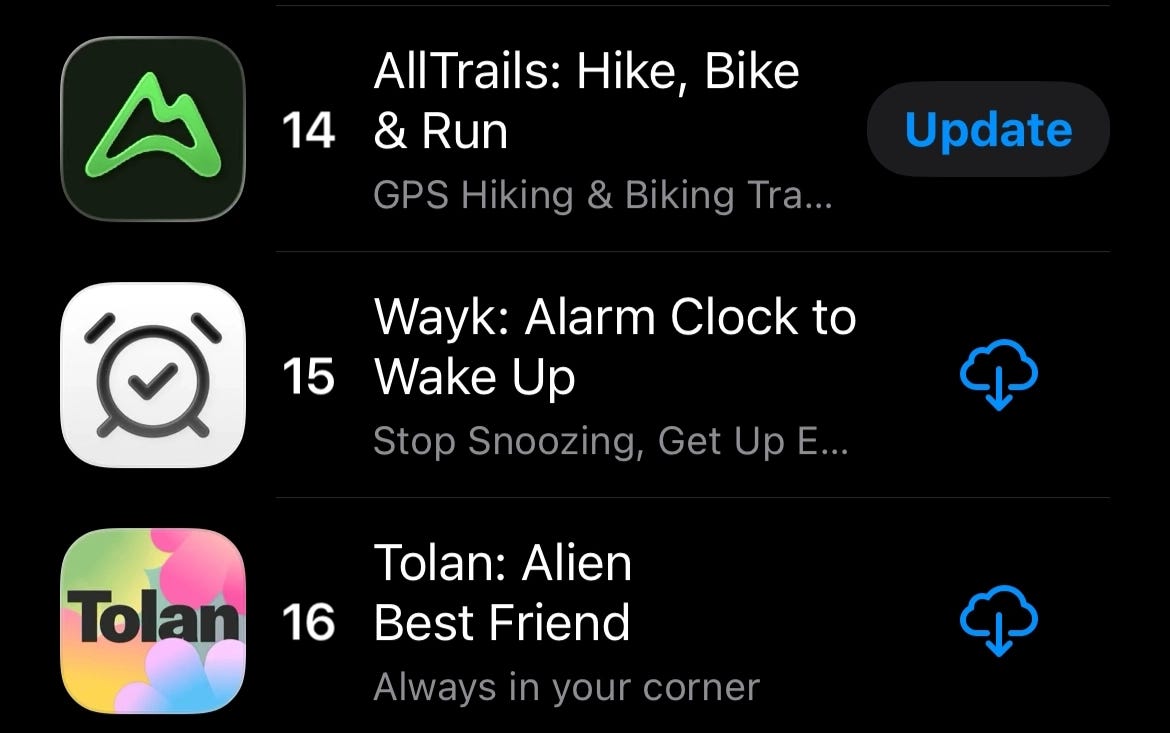
In the first 30 days after launching Wayk, a morning alarm app that makes you complete missions to turn off your alarm, we hit 25 million views on TikTok, reached #15 on the App Store, and crossed 100,000 downloads. Three 23 year olds, no VC money.
None of it happened because we were creative. It happened because we stopped trying to be. Here’s the full breakdown 👇
The Backstory
My two best friends and I could never wake up on time. Every morning was the same. Snooze, snooze, snooze, crawl out of bed late and already behind. The morning sets the tone for everything, but most people lose it before they even get up. Between snoozing and scrolling in bed, the average person wastes over 250 hours a year, almost 45 minutes every single morning, before their feet even hit the floor.
So we built Wayk. Your alarm won’t turn off until you complete a mission: photo of the sky, pushups, find a random object, say an affirmation. You start the day with a small win and by the time you’re done, you’re already up. Too late to go back to sleep.
First version took two weeks to build. We launched with a small UGC team ready to post on day one because an app with no social proof dies quietly.
The Hook That Changed Everything
About a week after launch I was scrolling TikTok studying content from apps in our space. One account kept coming up: Push-up Guy, the creator behind Pushscroll, a screen time blocker that makes you do pushups to unlock your phone.
His content was blowing up. Hundreds of thousands of likes. The format was dead simple:
Film yourself using the app
Show the annoying moment
Add a relatable POV caption
No fancy editing. No production. Just the raw reaction to the product doing its thing. Here’s what was working for him:
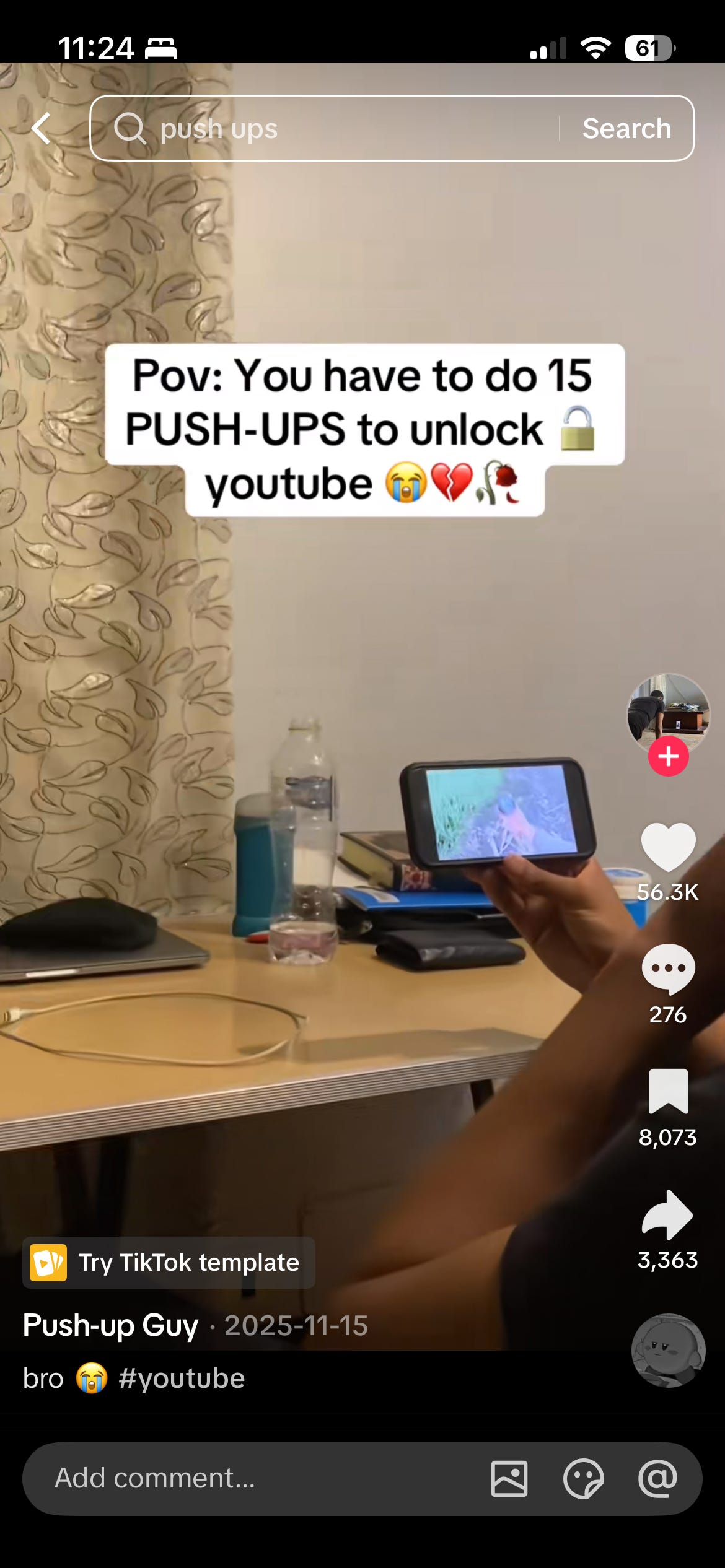
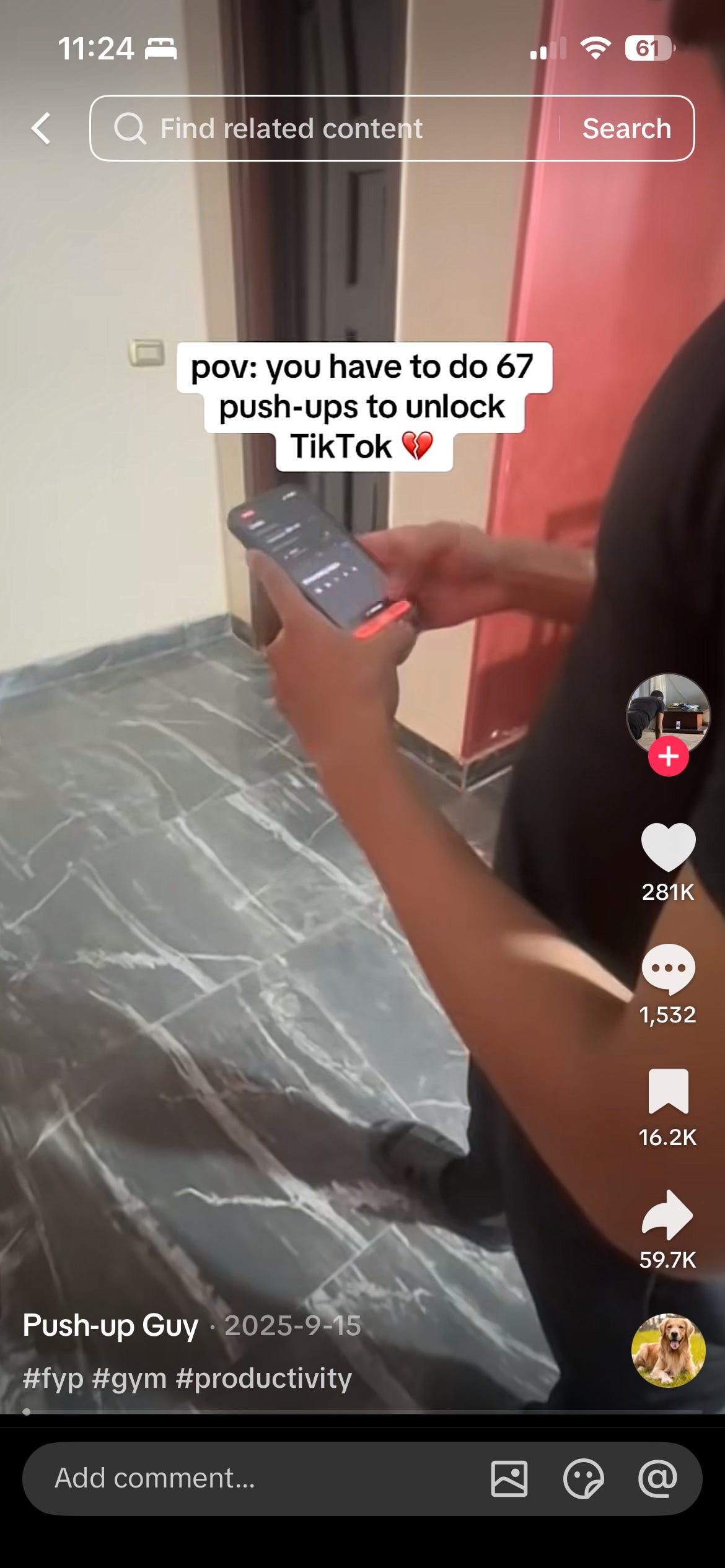
The products were different but the energy was identical. Both apps force you into a physical action before you can do the thing you want. Both create that comedic tension of being annoyed but also impressed. The hooks practically wrote themselves. You just had to swap the context.
The Playbook: How We Ported It
Here’s exactly how we took what was working for Pushscroll and made it ours.
1. Study what’s already landing.
I wasn’t looking for inspiration in alarm clock content. I was looking at adjacent categories like screen time, productivity, and fitness apps. Anything where the product creates a visible, filmable moment. Pushscroll’s videos had a clear pattern: POV caption + real reaction + app in action + short and raw.
2. Adapt the hook, keep the energy.
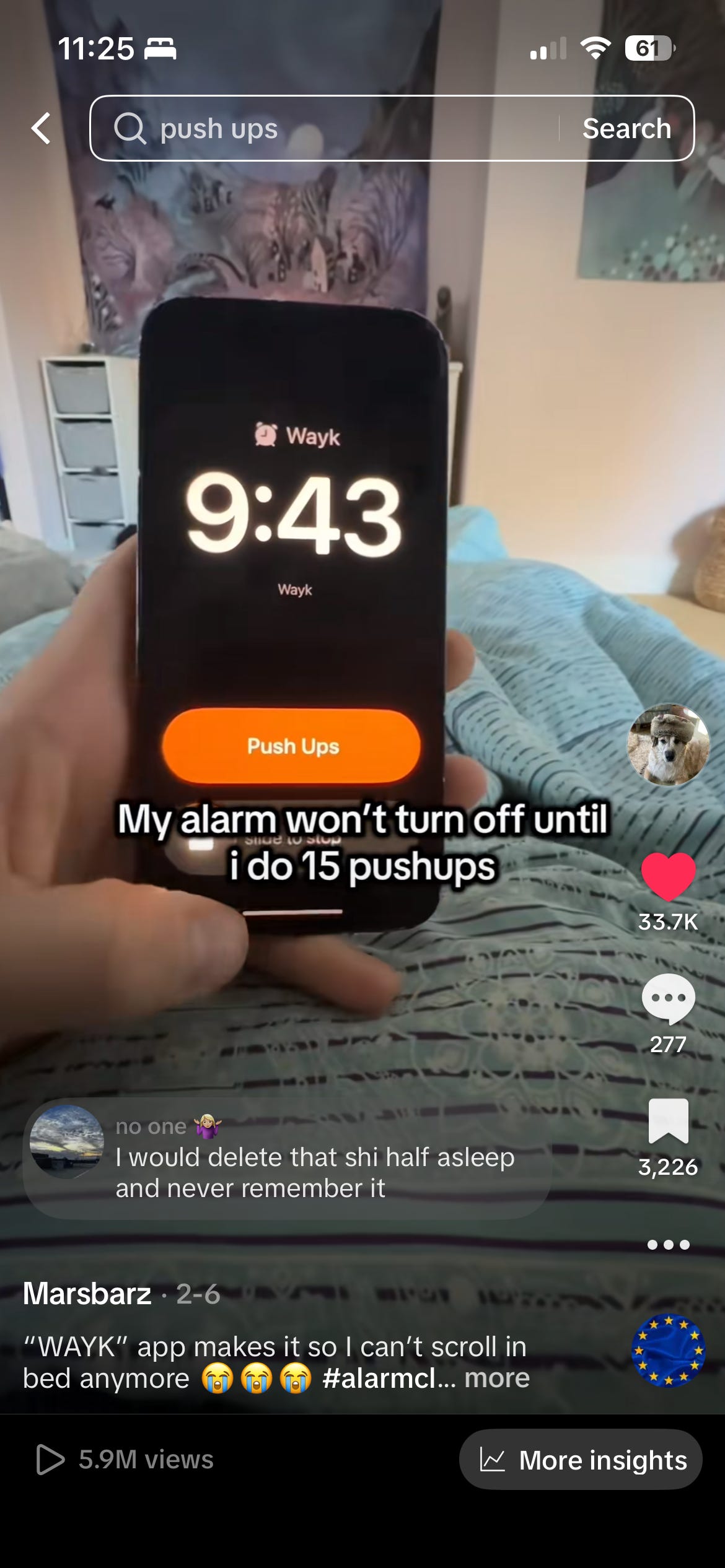
Pushscroll’s hook was “POV: you have to do X pushups to unlock [app].” Ours became “My alarm won’t turn off until I do 15 pushups.” Same structure, same frustrated-but-impressed energy, different product. The caption had to sound like something you’d text a friend, not something a brand would write.
3. Test it yourself first.
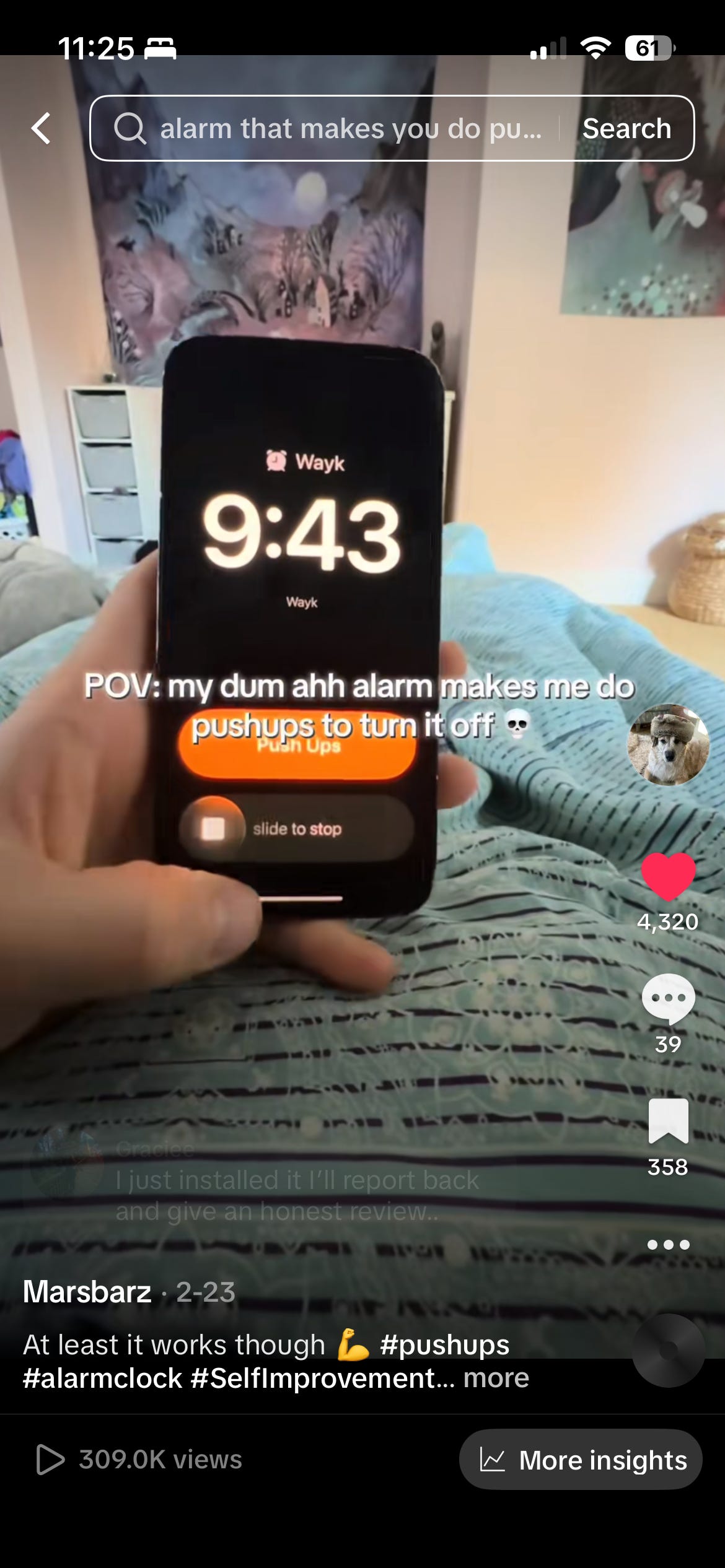
We didn’t hand this to creators right away. I filmed myself first. Alarm blaring, dropping to the floor, doing pushups before it stops. No special editing, no big production. The video took off. The images below show my first viral posts (ever) that drove thousands of downloads to the app!
4. Hand it to UGC creators and run it back.
Once the hook was proven, we gave the format to our UGC team. Same hook structure, slightly different angles (see tiktok here)
5. Repeat with new hooks.
When something pops you figure out why and run it back. We didn’t stop at pushups. We tested object hunt missions, pet missions, sky photo missions. Each one a new hook ported from the same playbook.
Find content already working → Adapt the format → Test it → Scale what hits.
What Worked vs. What Didn’t
😻 What worked:
✅ In-house short-form video. Our biggest channel by far. People are always surprised when they find out we’re a 3-person team.
✅ Hook porting from adjacent apps. Studying Pushscroll and adapting their proven formats gave us a repeatable content engine.
✅ UGC creators running proven hooks. Once a hook worked for us, handing it to creators scaled it without us filming everything.
😿 What didn’t:
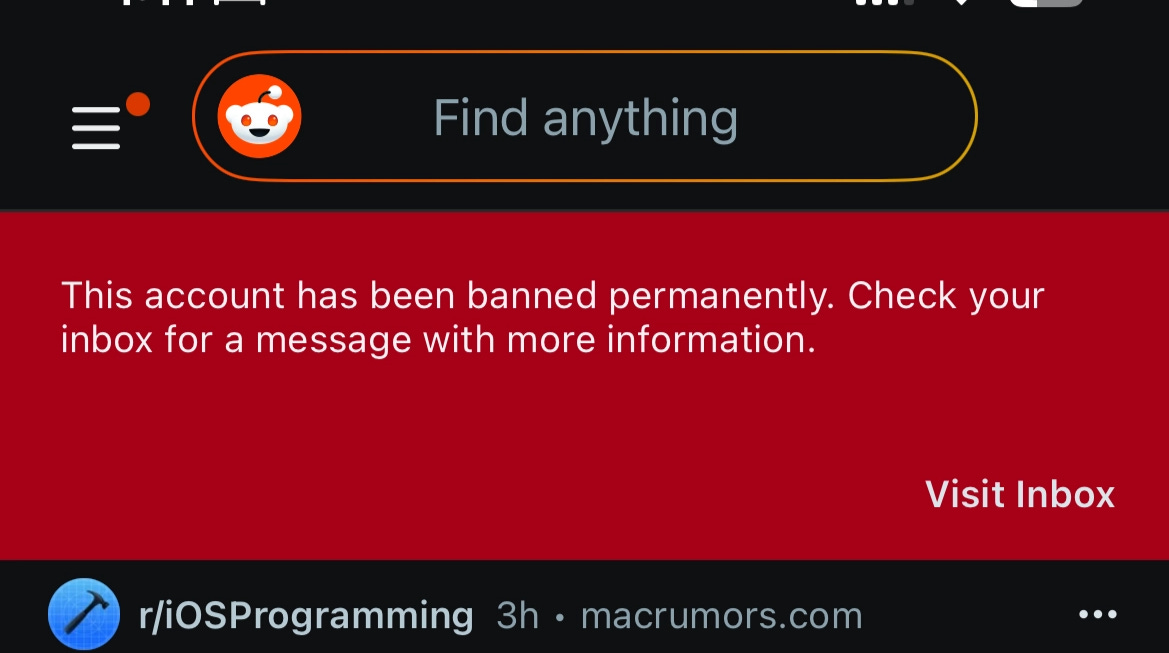
❌ Reddit. Total flop. Tried posting in relevant subs, got permanently banned for self-promotion 😅.
❌ X (Twitter). No traction at all.
Everything came from short-form video. Nothing else even came close. If you’re a small team launching a consumer app in 2025, TikTok is the entire game.
The Email That Says It All
We get emails from users every day now. One guy picked the “photo of grass” mission without realizing it was winter. Ended up shoveling a patch of his yard at 7am just to turn off his alarm. That email kind of says everything about why this works.
500K snooze-free mornings so far. We’re just getting started 🤝.

Written by Marlon Grandy, co-founder of Wayk