Lazyweb is live.
I’ve been sharing this journey for the last 2.5 months, so it feels good to finally say this plainly: Lazyweb is live.
This isn’t a big triumphant launch post. I just want to mark the moment, explain what Lazyweb actually is, and share a bit about what the last few months of building it were like.
What Lazyweb is

The simplest way to describe it is: Mobbin meets ChatGPT, but on a canvas.
It’s a design inspiration library supercharged with AI. You pull in references from a large library of real mobile and web screens, place them on a canvas, and quickly explore different design directions.
Instead of starting from a blank page, you work from real examples and use AI to mock variations, compare ideas, and analyze patterns and iterate quickly without getting trapped in a single thread.
That last part matters more than it sounds.
Vibe coding is too linear. You start going down a path… Claude, Codex and friends keep taking you further down that path, and before long you’re attached to it mostly because you’ve already spent time coding a lot of building blocks. That sunk-cost feeling is annoying in code in general, but it’s especially for UI/UX… the soul of the product.
What I wanted was a way to make building UI feel less like a tunnel and more like a workspace. Something that would let me look at strong patterns, compare multiple directions side by side, and most importantly quickly apply to what I am vibing on.
I wanted to move fast enough that I wouldn’t get emotionally attached to the first decent output and can leverage the thousands of A/B tests by the best in class companies to my advantage.
That’s what Lazyweb is.. it’s a fast design research and design exploration tool for vibe coders.
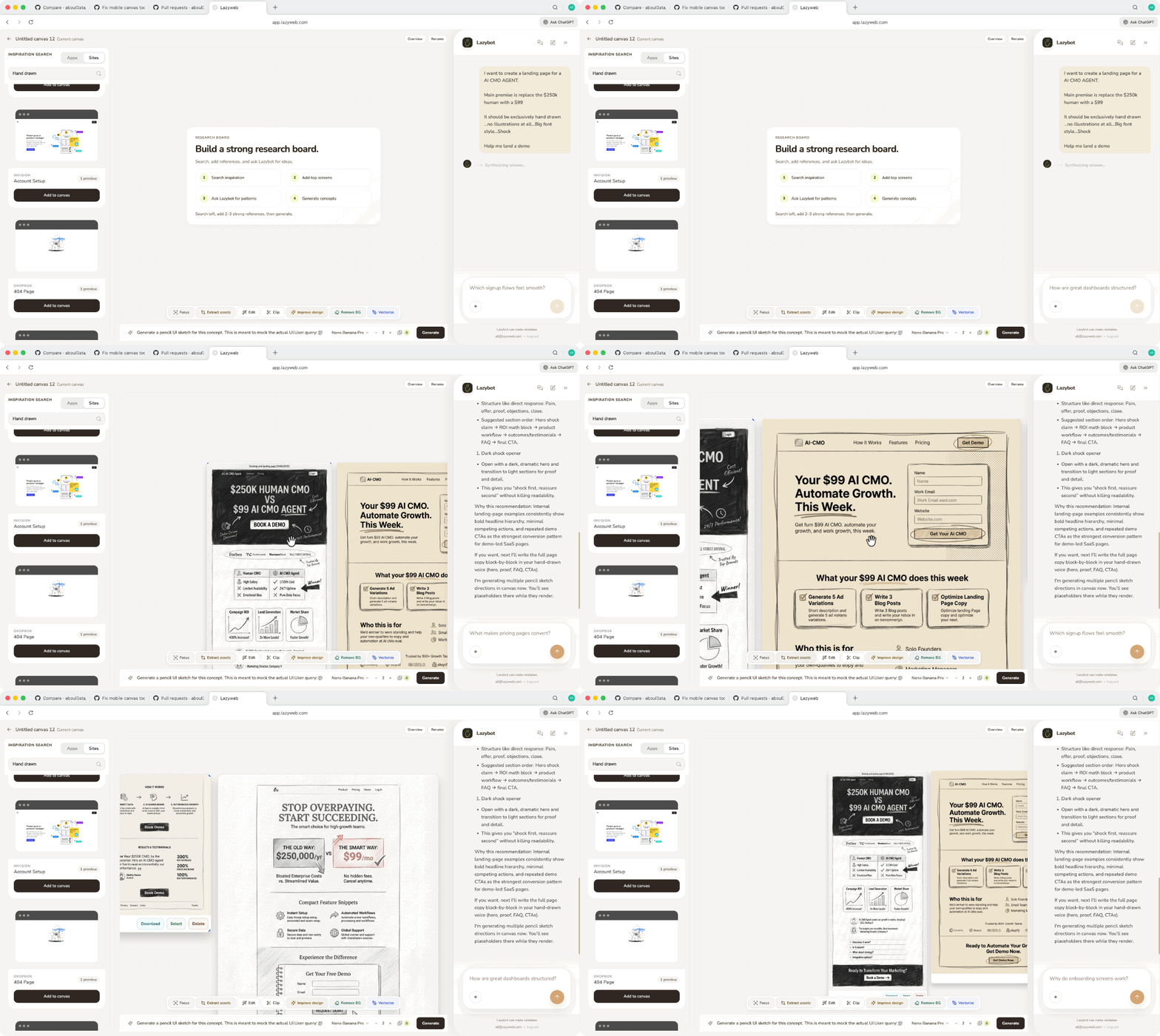
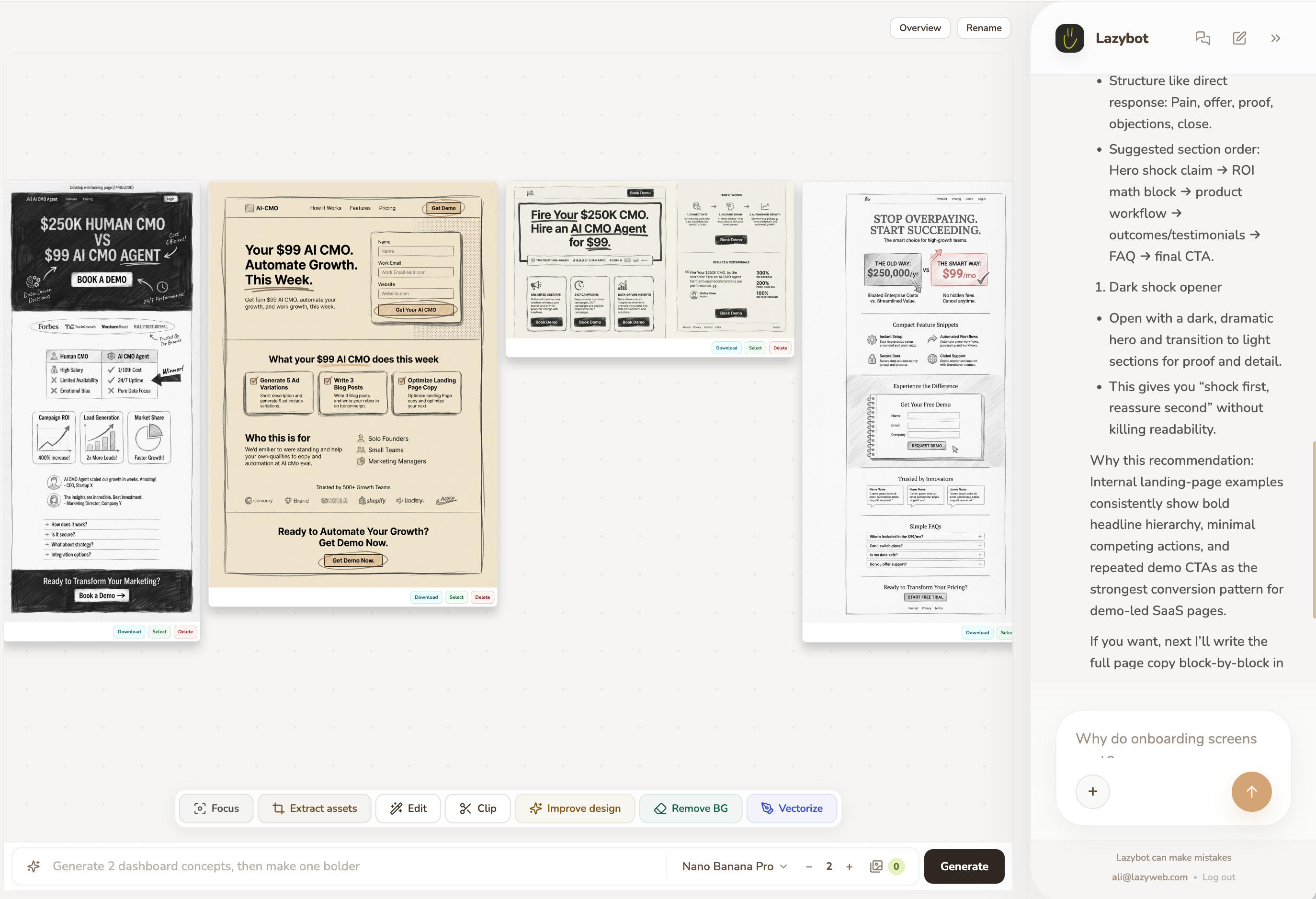
Under the hood, Lazyweb contains over 300,000 mobile and web screens and flows, paired with an AI agent that handles both design research and implementation. It typically begins with rough, low fidelity explorations and quickly progresses to high-fidelity variations, all grounded in real-world patterns and best practices…compressing what used to take days into minutes.
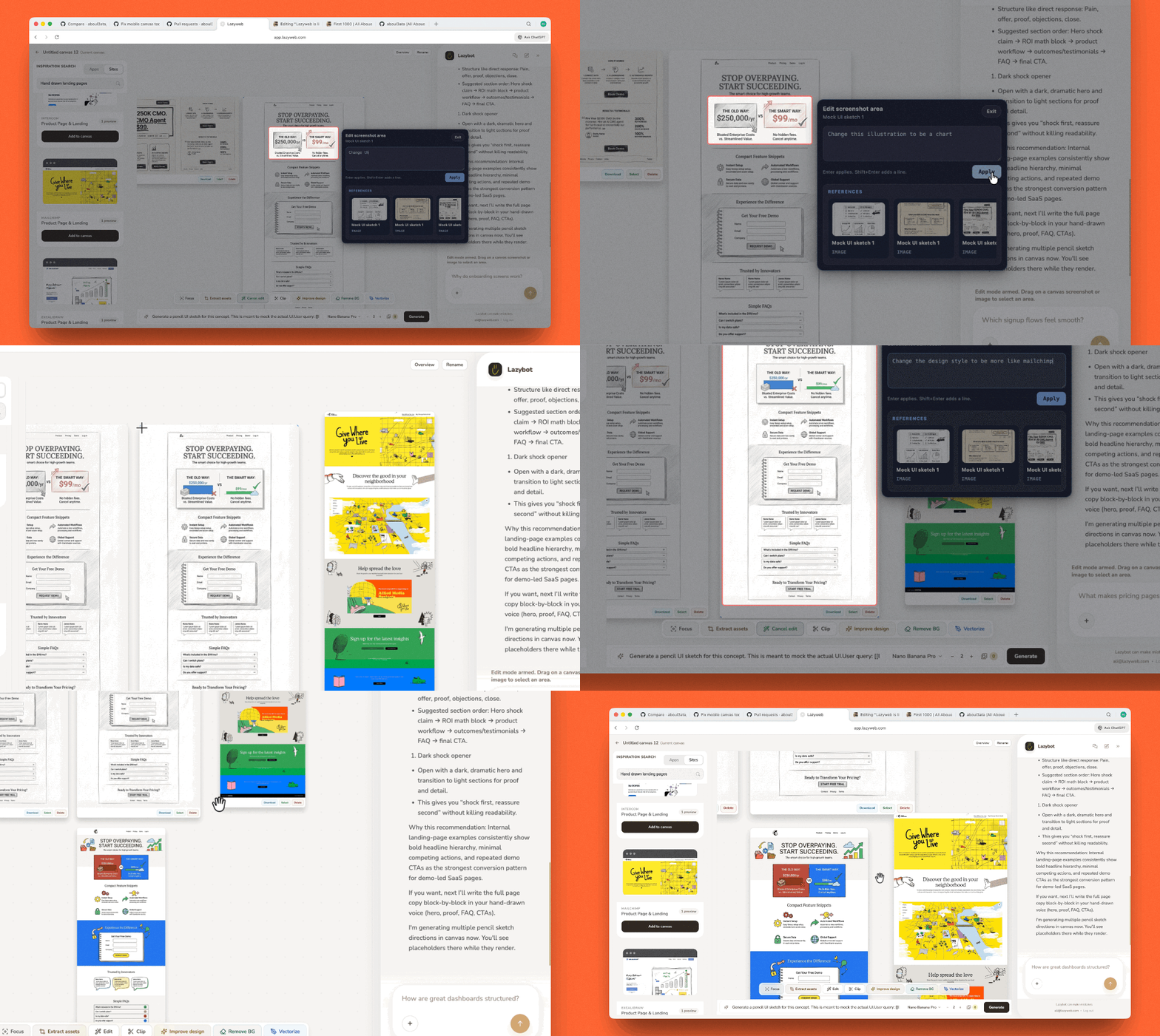
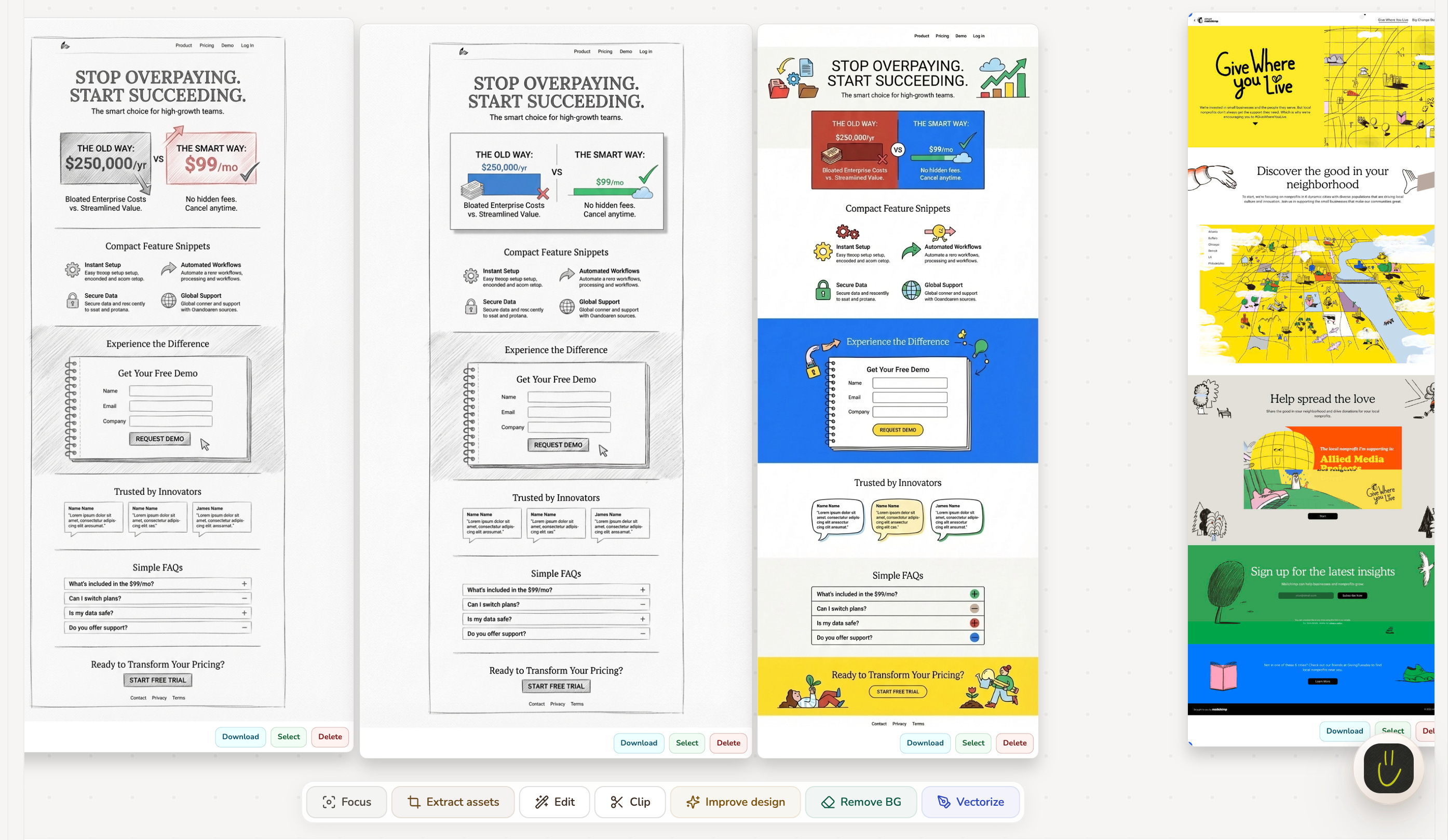
Once you land on something useful, you can keep going. You can edit with AI, extract assets, vectorize, upscale, and do the practical cleanup work that usually comes after exploration and when you are ready export these mocks and assets (and even references) to add to your favorite coding agent.
No fighting a design system, auto layout, layers, or complex tools built for designers.
Why I wanted to build it
A lot of the work I’ve done over the years has involved studying other products closely, spotting patterns, comparing flows, and turning those observations into decisions. That kind of design and product research has always been high leverage for me. It’s also always been a bit slow and messy.
Now that AI can help build things much faster, I’ve felt an even stronger need for a tool like this. AI is great at writing code, but left alone it still has pretty bad design instincts. It can make something polished-looking without making it good. It can give you output without giving you judgment.
What I wanted was a way to combine both sides: the speed of AI with the grounding of real product patterns. I wanted to be able to borrow from companies that have spent years and a lot of money refining their flows, while still leaving room for the weirder outlier ideas that make something feel distinct instead of generic.
In other words, I wanted to vibe design, not just vibe code. And the limiting factor to design vibing is inspiration followed by know how.
Lazyweb takes care of both…
The journey
Here we are 77 days later
Some of you will remember that the first version of Lazyweb was actually heading toward being a Mac analysis heavy app. At some point I had to admit that was the wrong direction, and I had to rewrite it as a web app instead. That was a painful shift, mostly because it meant throwing away work I had already spent real energy on.
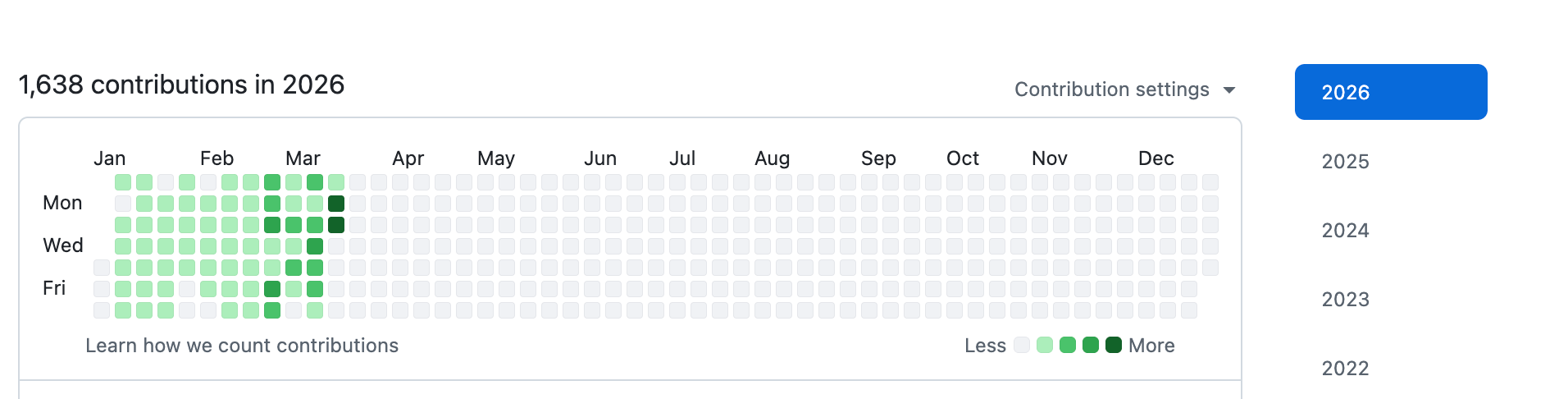
One of my bigger mistakes was getting too trigger-happy with Claude and Codex.
AI makes it dangerously easy to confuse motion with progress. You can produce a lot of code very quickly and still be making the product worse. The cost of taking action drops, which is great, but the cost of making a mess drops too. I definitely felt that. I got too trigger happy and spent the better half of this month simplifying, refactoring and deleting.
The other trap was building in the wrong order. It’s easy to tell myself I need X before Y before Z, even when Z is the thing the user actually wants. That logic sounds thoughtful and responsible, but a lot of the time it just created compounding problems.
Every extra dependency slows me down, complicates the product, and makes momentum harder to hold onto because I wasn’t working on “the real thing”.
What I actually realized is building should be like an inverted pyramid… start with the biggest thing in the roadmap that would provide (which usually comes last because of dependencies), hack your dependencies and work backwards to fix. This is how I started to get a good feel of the product and help sharpen my intuitions as I went along
The roller coaster is very real
The emotional roller coaster sucks.
Mostly because it’s hard to make sense or ground why I’m feeling sad happy depressed or on top of the world. The smallest things had the biggest swings on me and a lot of times it didn’t make sense why I was feeling what I am feeling. Walks, and writing help but they’re not magic bullets. The magic bullet is listening to my body instead of fighting it. I had to constantly remind the inner voice inside my head that….
I am not machine. I am not machine. I am not machine. I am not machine.
When I need a break, I take one. When I feel momentum, I try to use it. When I feel something off, I try to write it down and get to the bottom of it instead of just pushing through blindly.
If the issue is something within my control like uncertainty, avoidance, lack of effort — then I break it down and brute force momentum. If it’s outside my control, then I try to let go for a bit and come back to it later.
Building lazyweb felt more like sharp pushes followed by real decompression. Less like discipline as people usually describe it, and more like learning how to work with my own energy instead of constantly fighting it.
That’s probably the truest thing I can say about how Lazyweb got built.
So yes, lazyweb is live
That’s the announcement.
If you try it, I’d genuinely love feedback, especially the kind that tells me where the workflow is confusing, where it breaks, or what you expected it to do that it doesn’t do yet.
And thanks for following along with the whole journey. It took longer than I thought. I’m glad I stuck with it.
Now the real fun begins 🫡,
Ali Abouelatta